
Changing Perceptions and Portrayal at the Grassroots, Neeru Yadav

Neeru Yadav has emerged as a model of innovative grassroots leadership. Elected in 2020 as the first woman Sarpanch of her village, she got the title “Hockey Wali Sarpanch” by the residents, recognising her dedication to sports and youth engagement.
Investing two years of her salary, Neeru Yadav sponsored and established a girls’ hockey team, providing coaching, equipment, and a playground, empowering young women to compete at the panchayat, block, and district levels. Beyond sports, she co-founded Sachhi Saheli Mahila Agro Producer Company Limited, a women-led farmers’ organisation that offers subsidised agricultural inputs, strengthening rural women’s economic independence.
Recognised for her commitment to education, women’s empowerment, and community development, Neeru Yadav has received the Shiksha Shree Award and been felicitated by UNICEF and the Rajasthan Panchayati Raj Department.
This interview is part of the Worth Asking series by the Centre for Gender and Politics, which aims to shift the narrative around women in South Asian politics from viewing them as 'victims' to seeing them as competent leaders.

Tell us about your experiences as a young woman entering grassroots politics and serving as a village head. Why and how did you decide to enter electoral politics?
Neeru Yadav: I was born in a town, and I completed my post-graduation in Jaipur. I did my education outside the village and moved here after my marriage in 2013. When I arrived, women were expected to be veiled, it's a common practice in Rajasthan to have a 'Ghunghat' (veil). I never pulled the dupatta from my head to veil down.
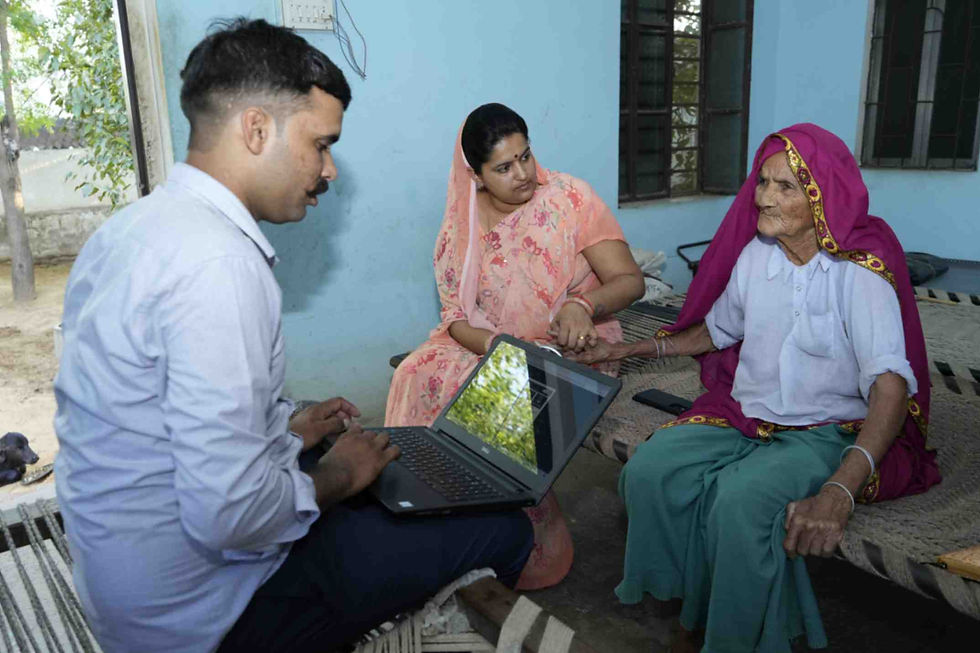
Living here, I interacted with many women and found that many of them couldn't even speak openly within their own families. Many women who are victims of domestic violence, or whose husbands are harassing them, cannot go and present their case.
In the village political system, if there is a problem, the first solution is sought from the Sarpanch in the Panchayat (public meeting with the Sarpanch). In that situation, the women’s side is not heard; they are unable to speak openly. I once asked a woman, "Why didn't you present your point openly, and why didn't you speak?" She said, "We do vote, but who will go and speak amongst the men, and who will listen? They don't let us speak there."
That’s when I thought, we need to change this.
Not just entering the system, but entering the system to change people's mindset and bring change within it. I said this to myself - this time, I want to fight the Sarpanch election. If I become their voice, I can bring women to the Panchayat, listen to their problems, and let them know that we are not just a vote bank; we can present our points well. For that, we must step into leadership ourselves.
What difficulties did you face in your political career while challenging them, and how did you deal with them?
Neeru Yadav: If you want to see the true form of democracy, then you have to come to the Panchayat elections. The candidates people choose live among, so there is greater scrutiny and higher expectations.
Secondly, for fighting in the Sarpanch election, first of all, you have to convince your family, as family relationships and caste hold a lot of importance in a Sarpanch election.
So, the very first challenge starts with the family. After convincing them, you have to go amongst the people in the village and assure them that you have the capability to work for every section of the village.
In my case, being highly educated became a disadvantage in a Sarpanch election. Many people rejected me during elections simply because I was raised in a town and my education was from a big city like Jaipur. They thought, 'What if we make her Sarpanch and she shifts out of the village to educate her children?' or 'If she is a city girl, how will she live in the village and understand our circumstances well?'
I had to assure people that if they chose me, I would dedicate my full time here in the Panchayat and do whatever the village needed.
Many people also thought, 'Why should we give our leadership into a woman's hands?' A woman who came into the village from outside after marriage, how will she understand and solve our problems? In villages, there is a perception that if anyone becomes Sarpanch, they mostly give it to a man. A woman gets a chance only when the seat is reserved. In that case, the family might field their woman just for her face, thinking the rest of the decisions will be ours.
The biggest challenge a woman Sarpanch faces is fighting against that ambition within her own family, where men believe the right to take decisions belongs only to them.

Would you like to share some experiences on how you dealt with these things? At the grassroots level, you are everywhere with the very people who vote for you. How did you manage their established perceptions and the big challenges they posed during and after the election?
Neeru Yadav: The very first step was taking my family into confidence. I assured them that if I became Sarpanch, I would not run away from the accountability of my family relationships.
When I fought the election, I personally visited every single house, met every single woman, man, and elder. I created a full manifesto and told them what my vision was and how I would bring changes to the village. I did all of that campaigning myself. On the day of polling, I stayed there from morning till evening. People saw my work, my way of talking, and that I was standing firm in my place. So, a trust was built among them.
After I became Sarpanch, people started coming to the house. Initially, men or village elders would prefer meeting the elder men of the family, thinking they would get things done through them. They would say, "We want to meet the Sarpanch," to my husband or father-in-law. I would say, "I am your Sarpanch, you elected me. Tell me what work you have, and give it to me."
In the beginning, everyone was doubtful about whether I could manage. But then I took all the work into my own hands and did it myself. From going to the Panchayat to visiting someone's house even in the evening if they had a problem, connecting people to government schemes, or managing infrastructure work—I did it all myself and started taking my own decisions.
Only then did people start feeling that a woman Sarpanch can also do her work. Before me, no woman Sarpanch had handled her own work. People thought a man from the house would surely do it. But when I handled the work myself, that perception slowly started to change: 'No, a woman Sarpanch can also do good work. She can also make good decisions and change the condition and direction of the village.' This change slowly began to occur to everyone.
In your political journey, do you have someone who inspires, motivates, and keeps you strong as you navigate challenges?
Neeru Yadav: My husband supported me greatly in all of this. I came to his village after marriage, and without his support, this journey would have been much more challenging. As I mentioned, a woman entering politics and any other career has to first fight within her own family. My husband always said, ‘The final decision would be yours. And others in the family supported me too; they never tried to take over the Sarpanch position and be a proxy sarpanch.
I have also received strong support from my mother, who has always been a working woman, managing both home and work. There are also some women who stepped out of the village and started their own work; some were inspired by me, and I was inspired by them.

Many women feel, or are told, that politics is not a safe space for women. What would you like to say to those women?
Neeru Yadav: Let me say this, it’s not just politics—any field is challenging for women because societal thinking about women’s role as homemakers restricts them within domestic responsibilities. Also, women are often perceived and portrayed as emotional decision-makers, which undermines their leadership. Our biggest challenge is to change that mindset.
I believe leadership has no gender; gender does not define leadership. If women want to enter politics, they must put forth their campaign issues, build their own teams, change the system from within, and change people’s thinking. Whatever work you do, you must be fully prepared.
For those already at a leadership level who have faced or learnt about such challenges, it is our responsibility to ensure that other women who want to contest elections do not face the same struggles and to help create a safe environment for them.
What would be your message to those who want to enter or are thinking about entering politics in the future?
Neeru Yadav: To men planning to join politics, I would just say that just as in family life, to run a household, there should be a partnership and cooperation of both, similarly, whether it is about running the country, society, or the Panchayat, working together will be able to see a healthy and developed India.
If women with leadership qualities, who truly believe in their leadership qualities, join politics and have allyship from their counterparts, they would be really successful and could bring about drastic changes for the development of society.
Thank you.
Credits
Interviewee: Neeru Yadav
Interviewer: Sugandha Parmar
Series: Worth Asking 2025-26
Editor: Sugandha Parmar
Design & Layout & Social Media Outreach: Riya Hira
Additional Contributor: Natasha Singh
Image Credits: All the pictures are taken from https://hockeywalisarpanch.com/gallery.php#
Stay tuned for more Worth Asking Interviews.
This interview is a part of the Worth Asking Series 2025-26. The series aims to bring conversations with women in politics about politics as a career choice and with male politicians about their role as allies.
Read previous interviews in the Worth Asking Series,here.


Comments