
Who Owns the Classical?

Updated: Jun 25
The “classical” in South Indian arts is often presented as a timeless inheritance. In Bharatanatyam and Carnatic music, continuity is treated as an aesthetic value and a marker of cultural legitimacy It is presented as an idea of an unbroken lineage of culture & traditions passed on across generations, which remains central to how these art forms are perceived, experienced, and revered.
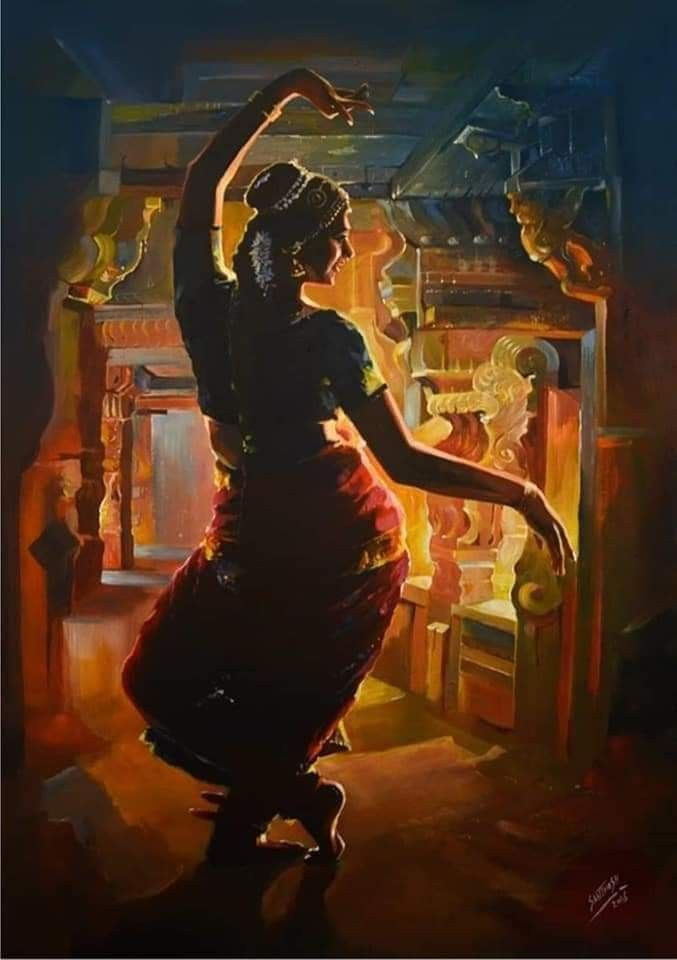
The histories of these traditions are more layered than the narratives that often surround them. What is frequently described as the “revival” of South Indian classical arts during the late nineteenth and early twentieth centuries is usually framed as a process of cultural recovery, an effort to preserve artistic practices believed to be in decline under colonial rule. Yet this does not entirely capture the social appropriations that accompanied that process.
The practices we now recognise as Bharatanatyam (previously called ThevarAdiyargal Koothu) and Carnatic music were sustained for generations by hereditary performers, particularly women from Devadasi/ThevarAdiyargal communities (ThevarAdiyargal, which translates to “servants of the lord” in Tamil. Thevan meaning God/King and Adiyar meaning devotee/servant). These communities were not peripheral to the arts; they were central to their performance, transmission, and evolution. Their labour formed an essential part of what later came to be institutionalised as “classical.” The restructuring of these art forms under colonial modernity and nationalist reform altered their social location. One may note that the reformist movements, new cultural institutions, and emerging upper-caste patronage circuits contributed to redefining how the arts were performed, taught, and publicly accepted. As the arts acquired the status of the “classical,” the communities historically associated with them were pushed to marginal social positions within the new cultural order. The consolidation of the classical, therefore, was an aesthetic, institutional and social process.
Today, legitimacy within the classical arts continues to be shaped via sabhas, lineages, festivals, funding networks, and performance circuits. These spaces operate through the yardstick of “tradition,” “standards,” and “quality”, but are not entirely neutral. They are built by caste, class, language, and access, while their histories dictate who gains visibility, who is recognised, and authorised within the field.
For those within the arts, these dynamics are not immediately apparent. The stage can appear to function as an equalising space, but merit rarely circulates independently of institutional access, social networks, and forms of cultural capital that enable some practitioners to move more easily through recognised circuits. This becomes clearer when we understand the classical not only as an artistic category, but as a structured cultural field. Drawing on Pierre Bourdieu, Michel Foucault, and B. R. Ambedkar, respectively, one might observe the classical arts as spaces in which fame and prestige accumulate unevenly around particular institutions and lineages; learn how structures of power produce norms, defining what is authentic and worthy of preservation and how social inequality is often structured. When studied through these lenses, the classical emerges as a regime of cultural recognition primarily shaped by institutional power.
Democratic participation has expanded across South Asia, especially among women. In India, women’s voter participation has steadily improved. In some regions, it now equals or exceeds that of men. Still, this growth does not translate equally into positions of power or decision-making. This makes sense if we see classical arts as a cultural area with its own rules.
A similar dynamic can be observed within the classical arts, where women remain central to the everyday life of these traditions; they constitute its most visible presence, they train rigorously, sustain pedagogical lineages, perform extensively, and contribute significantly to the continuity of the field. Over time, the practitioner realises that institutional leadership, canon formation, programming decisions, and the ability to define artistic legitimacy often remain unevenly distributed within certain privileged circuits. As a result, women, the less privileged and the marginalised remain differently positioned within the structures that influence the system.
One can visibly see this in moments that are publicly celebrated. The arangetram, for example, is widely understood as a dancer’s formal debut and a recognition of artistic readiness. At the same time, it marks entry into a larger social and institutional ecosystem. This requires access to training, financial resources, performance infrastructure, and forms of cultural validation, which are not evenly available to all practitioners. In this light, the arangetram reflects not only artistic preparation but also highlights the budding artist’s ability to be recognised within an existing framework of authority. A similar dynamic operates within performance circuits more broadly. Entry into prestigious sabhas during the Margazhi season is often described in terms of artistic quality. Over time, one can notice recurring patterns and understand who gets to perform regularly, who is given prominent prime time slots, whose work is endorsed, and whose is pushed to the periphery. These outcomes are not often the marks of explicit exclusion; rather, they reflect how institutional authority and cultural visibility tend to congregate within particular networks over time.
For many young practitioners, entry into these places depends equally on institutional endorsement as on artistic ability. Across sabhas, cultural festivals, and government-funded platforms such as the Indian Council for Cultural Relations, recommendations frequently function as an informal currency of legitimacy. Opportunities often emerge through popular and revered Gurus, established institutions, or cultural networks capable of conferring credibility within the field. In practice, this creates uneven pathways for emerging artists; those without access to influential lineages, institutional backing, or the financial capacity to sustain visibility within these circuits frequently encounter greater difficulty securing opportunities, regardless of artistic merit. These patterns are also established by longer histories of caste and social access because many influential cultural institutions within the classical arts emerged through upper-caste networks of patronage and authority.
These dynamics often unfold through prolonged dependence on institutional trust and informal promises of opportunity. I have seen, within my own family, how a young practitioner committed to the art for over 18 years, after arangetram, was assured of performance opportunities and a solo debut, followed by sustained involvement within a prominent institutional network. Over the years, her role largely moved away from artistic growth towards unpaid organisational labour like designing brand collaterals, preparing educational content, teaching, producing creatives for outreach, and supporting the broader visibility of the Guru and their organisation itself. Despite the significant creative contribution, time, effort and energy involved, this labour remained largely uncredited and unpaid, making the experience disorienting. Retrospectively, it actively showcased the contradiction existing within the art world. Artists and art institutions often publicly advocate for the dignity of artistic labour and the need for fair compensation; however, in practice, the younger practitioners continue to occupy informal economies of unpaid work, deferred recognition, and aspirational loyalty when opportunities are mediated through mentorship and institutional gatekeeping. None of this labour was framed as exploitation; instead, it was presented as mentorship, an investment in a future artistic career.
The assured opportunities never materialised, the experience was just a disappointment, and a sense of disillusionment that led the young talent to gradually withdraw from the field altogether. Experiences such as these are difficult to classify because they rarely appear as overt exclusion. Instead, they reveal how aspiration, institutional dependence, and uneven access can become intertwined in ways that disproportionately affect younger practitioners without established networks or authority within the field to find the right opportunity for their talent.
One can note that comparable dynamics appear in other areas of social life across South Asia. In many households, cooking continues to be undertaken primarily by women as a daily routine and often is categorised as unrecognised labour. Whereas professional culinary spaces confer prestige and public authorship differently, though the labour itself does not fundamentally change, the conditions under which it acquires visibility do. Craft traditions reveal similar patterns. Skills preserved by women across generations often earn wider recognition only after entering formal markets, government-recognised cultural frameworks, or institutional circuits that reshape how value is assigned. An intersectional lens will help illuminate how legitimacy is manufactured unevenly across the diverse domains within the classical arts based on caste, gender, time and access; however, it is important not to reduce this discussion to a narrative of exclusion alone.
Women within the classical arts are not passive agents; they are active participants who continue to teach, promote, innovate, build traditions, establish institutions, and reinterpret the arts in meaningful ways. Much of what is understood today as continuity within the classical survives because of their labour and intellectual contribution. Those who sustain cultural traditions are not always equally positioned in shaping the institutional terms through which those traditions are recognised. For practitioners within the field, engaging with these questions can be uncomfortable; it requires critical examination of the historical narratives and the contemporary structures through which legitimacy continues to be organised.
The question, then, is not whether hereditary communities or women or the lesser privileged belong within the classical. They always have, but the more difficult question is how the “classical” continues to be defined in the present. We need to interrogate who determines legitimacy, whose histories are foregrounded, and how authority is distributed within established cultural institutions, since these are not merely abstract debates; they shape access, visibility, and the future of the arts themselves. Asking such questions does not diminish the classical; rather, it is to take seriously the conditions through which traditions are continuously made and sustained. The “classical” is not something we inherit intact; it is something institutions, recognition and memory continuously produce, and in making it, they also decide who it is for. Acknowledging this will allow us to become reflective, expansive, and attentive to the histories and institutions that continue to shape it across South Asia.
Author:

Shahambare.T is an independent writer, researcher, heritage enthusiast, storyteller and communications strategist. She holds an undergraduate degree in Life Sciences, post graduate degree in Botany and a post-graduate diploma in Liberal Studies. With training in Carnatic Music, Religious Literacy and Comparative World Religions, she brings an interdisciplinary lens to engage with the ancient and the modern, tracing how ideas embedded in art, literature and everyday life continue to unpack questions of belonging, authority and social change. Over the course of 7+ years at Ashoka University, she worked across communications, outreach, brand and storytelling, producing institutional narratives on education, impact and identity.
Special Credits:
Editorial Support: This piece was reviewed and edited by Prof. Suman Singh, Editorial Head, Centre for Gender and Politics.
Picture Credits: Pinterest
This article is published under CGAP Blogs. Our blog is a space for practitioners, researchers, policymakers, & advocates to share perspectives on gender and politics across South Asia in a language that is accessible, grounded, and worth reading.
CGAP, Centre for Gender and Politics, is a think tank that works at the intersection of women, politics, & South Asia to produce high-quality research & push for narratives of women as leaders, and not as victims. Our work includes Beyond Victims, Worth Asking, and the Parliamentary Readiness Review.
Read our previous publications, here.


Comments